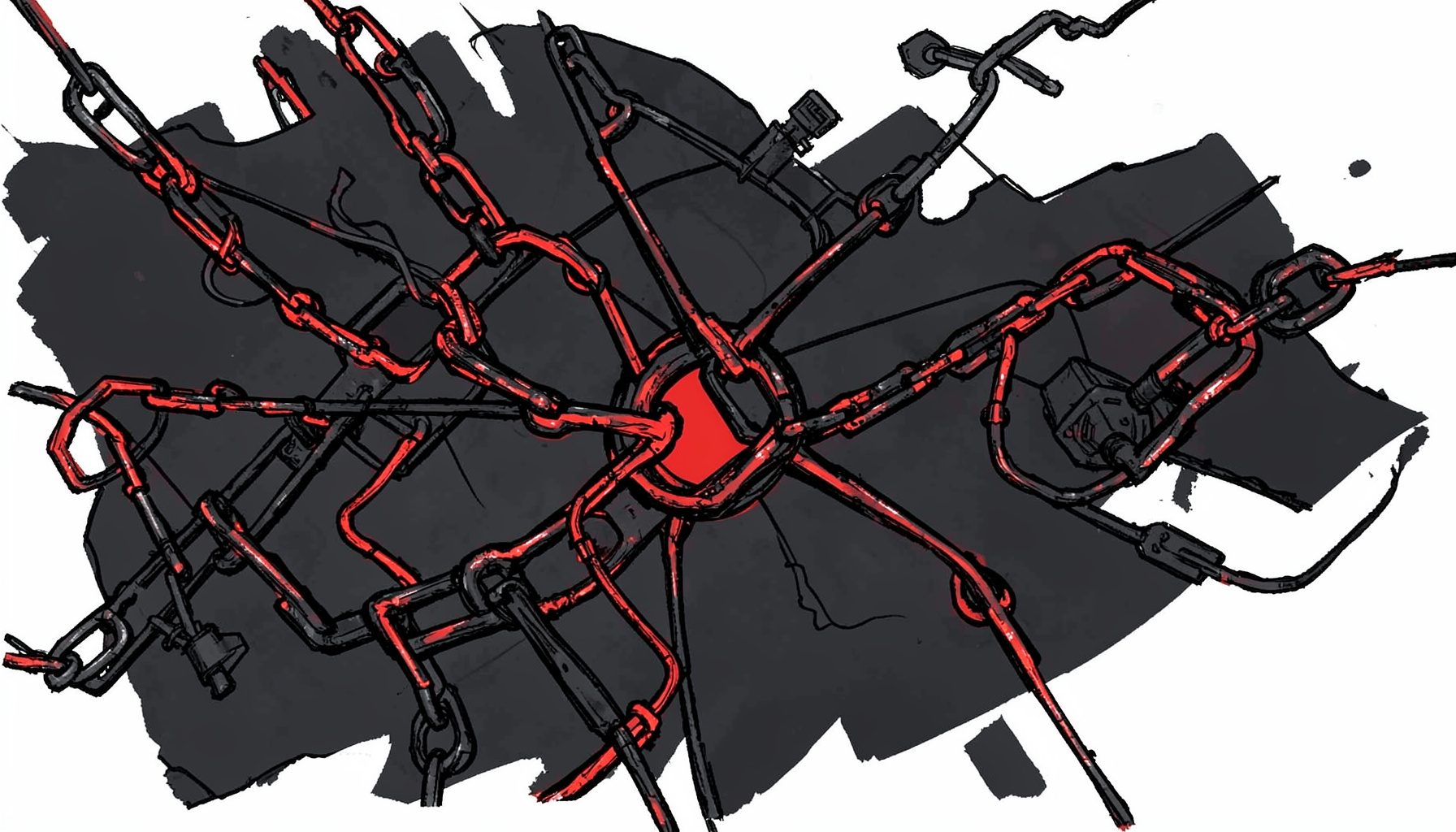
Blockchain
Technology that reduces mediator roles and enables transparent peer-to-peer transactions.
Bitcoin Trading
Understanding digital currency markets and the risks of price fluctuation.
ORIE Congress
The 38th National Operations Research and Industrial Engineering Congress, held June 26–29, 2018.
Industry 4.0
Theme: "ORIE and 4th Industrial Revolution" — hosted by Anadolu University in Eskişehir, Turkey.
Digital Currency Meets Academic Excellence
This site brings together two distinct bodies of content: a WordPress blog from April 2021 covering cryptocurrency education — blockchain importance, Bitcoin merits, and investment strategies — and the official web presence of the 38th National Operations Research and Industrial Engineering Congress, which took place in Eskişehir, Turkey, in June 2018.
The congress was hosted by Anadolu University's Department of Industrial Engineering under the theme "ORIE and 4th Industrial Revolution," featuring invited speakers, a scientific program, competitions, and paper submissions.
Blockchain technology represents a fundamental shift in how digital transactions are recorded and verified. By distributing a shared ledger across a decentralized network, it removes the need for central mediators and creates a system where trust is built into the protocol itself. Each block of data is cryptographically linked to the previous one, forming an immutable chain that resists tampering and fraud. This architecture enables transparent peer-to-peer exchanges that can be audited by anyone at any time, making the entire process more open and accountable than traditional financial infrastructure.
The rise of digital currencies has introduced new ways of thinking about value, ownership, and the movement of money across borders. Bitcoin and other cryptocurrencies operate on principles that challenge conventional banking by offering borderless, permissionless transactions that do not rely on a central authority. For investors and technologists alike, understanding the mechanics of these markets is essential, as price volatility can be significant and the regulatory landscape continues to evolve. Digital currency markets demand careful analysis, risk awareness, and a long-term perspective on technological adoption.
The thirty-eighth National Operations Research and Industrial Engineering Congress brought together researchers, practitioners, and students to explore the intersection of analytical methods and emerging technologies. Held over four days in late June, the event provided a platform for sharing scientific findings, debating new methodologies, and forging collaborations across disciplines. The congress has long served as a cornerstone for the operations research community, fostering dialogue between academia and industry while highlighting the practical applications of mathematical modeling and optimization techniques.
Industry 4.0 describes the ongoing transformation of manufacturing and production through the integration of intelligent systems, data exchange, and automation. Under the theme of operations research and the fourth industrial revolution, the congress examined how analytical tools can guide this shift toward smarter factories, connected supply chains, and real-time decision-making. The convergence of physical machinery with digital intelligence creates opportunities for efficiency gains that were previously unimaginable, while also raising important questions about workforce adaptation and systemic resilience.
Hosted by a major university in Eskişehir, the congress drew participants from across the country and beyond, reflecting the growing international interest in operations research and its role in shaping technological progress. The city itself, known for its vibrant academic culture and dynamic student population, provided a fitting backdrop for discussions about innovation and the future of industry. Attendees had the opportunity to engage with keynote presentations, parallel sessions, and informal networking events that encouraged the cross-pollination of ideas between different fields and specializations.
The scientific program of the congress covered a broad spectrum of topics, from classical optimization and stochastic modeling to emerging areas such as machine learning and blockchain applications. Presenters shared research that addressed real-world challenges in logistics, healthcare, energy, and finance, demonstrating the versatility of operations research methods. By bringing together diverse perspectives under one roof, the program aimed to spark new lines of inquiry and encourage interdisciplinary approaches that could lead to breakthroughs in both theory and practice.
Digital transformation is reshaping not only industry but also the very fabric of economic and social life. As money becomes increasingly digital, the systems that support it must evolve to handle new demands for speed, security, and accessibility. The conversations that took place at the congress reflected a growing awareness that operations research and industrial engineering have vital contributions to make in designing the infrastructure of a digitally native economy, from optimizing blockchain networks to modeling the behavior of decentralized financial systems.
Looking ahead, the themes explored at the congress continue to resonate as blockchain technology matures and digital currencies gain wider acceptance. The questions raised about transparency, efficiency, and the role of intermediaries remain as relevant as ever, and the analytical tools championed by the operations research community are essential for navigating this complex terrain. By fostering rigorous scientific inquiry alongside practical experimentation, events like this help chart a course toward a more connected and intelligently designed future.

38th National ORIE Congress
Held from June 26 to 29, 2018, in Eskişehir, Turkey, this congress brought together researchers and practitioners in operations research and industrial engineering.
- Hosted by Anadolu University, Department of Industrial Engineering
- Theme: ORIE and 4th Industrial Revolution
- Invited speakers and scientific program
- Competitions and paper submissions